
Some childhood moments stay in a parent’s heart forever – the first smile, the first step, and the first word. For parents, hearing their child say “Amma” or “Nanna” for the first time is a milestone filled with excitement and happiness. These early words are more than just sounds; they are the beginning of a child’s ability to connect, express needs, and interact with the world around them.
However, not every child develops communication skills at the same pace. Some children may take longer to start speaking, struggle to pronounce words clearly, or find it difficult to express themselves. As parents, it is natural to wonder whether these challenges are simply part of individual development or signs that additional support may be needed.
At Happyyou Child Development Centre, many parents share similar concerns. Often, they notice that their child understands instructions well and responds to familiar situations but has difficulty communicating through speech. In such cases, an early assessment can help identify the underlying challenges and guide families toward the right support.
The good news is that many speech and communication difficulties can improve significantly with timely intervention. Understanding the signs, causes, and available treatment options can help parents make informed decisions and support their child’s communication journey with confidence.
What Are Speech Disorders in Children?
Speech disorders occur when a child has difficulty speaking clearly or producing sounds correctly. Some children may struggle to pronounce certain words, while others may have trouble speaking smoothly or expressing themselves through speech.
It is important to understand that this is not because a child is being stubborn or unwilling to speak. In many cases, they simply need extra support to develop their communication skills.
Speech disorders can affect a child’s ability to communicate with family members, friends, and teachers. With early identification and the right therapy, many children show significant improvement.
Parents often confuse speech disorders with language delays, but they are not exactly the same. A speech disorder affects how a child says words, while a language delay affects how a child understands and uses words to communicate. This is why a professional assessment is important to identify the child’s specific needs and provide the right support.
Why Early Speech Development Matters?
Communication is an important part of a child’s everyday life. Children use speech to express their needs, share their thoughts, ask questions, make friends, and participate in learning activities.
When a child has difficulty speaking or communicating, it can affect more than just their ability to talk. They may feel frustrated when others cannot understand them, find it harder to interact with other children, or struggle to express their emotions and needs clearly.
Early speech and language skills also play an important role in a child’s social, emotional, and academic development. Identifying speech difficulties early allows children to receive the support they need before these challenges begin to affect their confidence and learning.
With timely intervention and the right guidance, children can develop stronger communication skills and feel more confident in everyday situations.
Signs of Speech Disorders in Children
Every child develops at their own pace, but certain signs may indicate that a child is experiencing speech difficulties.
Parents should watch for:
- Delayed speech milestones compared to children of the same age
- Difficulty pronouncing words clearly
- Frequent stuttering or repeating sounds and words
- Limited vocabulary for their age
- Difficulty forming sentences
- Frustration while trying to communicate
- Difficulty interacting or communicating with other children
It is important to remember that experiencing one of these signs occasionally does not always mean a child has a speech disorder. However, if several of these signs are present or continue over time, it may be helpful to consult a speech therapist for a professional assessment.
What Causes Speech Disorders in Children?
Speech disorders can occur for several reasons, and in many cases, more than one factor may be involved. Identifying the underlying cause helps therapists provide the most effective support for a child’s communication development.
Some common causes include:
Developmental Delays
Some children develop speech and language skills more slowly than others. They may take longer to reach communication milestones compared to their peers.
Hearing Difficulties
Children learn to speak by listening to the sounds around them. If a child has hearing problems, it may affect their ability to hear, understand, and imitate speech sounds correctly.
Neurological Conditions
Certain neurological conditions can affect the brain’s ability to control speech and language development, making communication more challenging.
Oral-Motor Difficulties
Speech requires the lips, tongue, jaw, and facial muscles to work together. Difficulties with muscle strength or coordination can affect a child’s ability to produce clear speech.
Structural Differences
Physical conditions such as cleft palate or other differences in the mouth and oral structures may impact speech production.
Family History
Speech and language difficulties can sometimes run in families, increasing the likelihood of similar challenges in children.
Understanding the cause of a speech disorder is an important step toward creating the right treatment plan and helping a child develop stronger communication skills.
Types of Speech Disorders in Children
Speech disorders can affect children in different ways. Understanding the type of speech difficulty a child is experiencing helps therapists provide the most effective treatment and support.
Articulation Disorders
Children with articulation disorders have difficulty pronouncing certain sounds correctly. For example, a child may say “wabbit” instead of “rabbit” or substitute one sound for another.
Phonological Disorders
In phonological disorders, children have difficulty understanding and using sound patterns correctly. They may leave out sounds or consistently replace certain sounds in many different words.
Fluency Disorders
Fluency disorders affect the smooth flow of speech. Children may repeat sounds, words, or syllables, pause frequently while speaking, or experience stuttering.
Voice Disorders
Voice disorders affect the quality, pitch, or volume of a child’s voice. The voice may sound hoarse, strained, unusually soft, or different from what is expected for the child’s age.
A professional assessment can help identify the specific type of speech disorder and guide the child toward the most appropriate therapy and support.
How Speech Therapy Helps Children?
Speech therapy helps children develop the skills they need to communicate more clearly and confidently. It is not just about improving speech – it is about helping children express their thoughts, needs, and feelings effectively.
Through personalized activities and guided practice, speech therapy can help children:
- Improve pronunciation and speech clarity
- Build vocabulary and language skills
- Form sentences more effectively
- Develop listening and comprehension skills
- Improve speech fluency
- Increase confidence in communication
Every child progresses at their own pace. With consistent support, practice, and encouragement, many children show significant improvement in their communication abilities over time.
What Happens During a Speech Therapy Session?
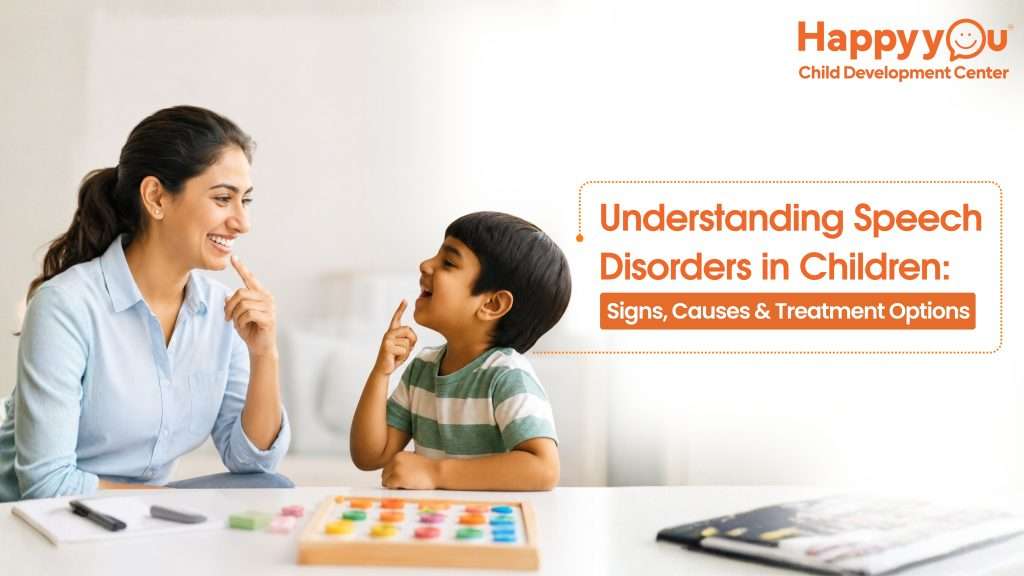
Many parents are unsure about what to expect during speech therapy. In reality, sessions are designed to be engaging, interactive, and enjoyable for children.
Depending on the child’s needs, a speech therapy sessions will be customized at HappyYou Child Development Centre.
We carefully planned to help children develop speech and language skills in a fun and supportive environment. While children often see the session as playtime, each activity is designed to support their communication development and build confidence.
Why Parents Choose Happyyou Child Development Centre in Nellore?
When parents notice challenges in their child’s speech and communication development, choosing the right support can feel overwhelming. They want a place where their child feels comfortable, understood, and encouraged to grow.
At Happyyou Child Development Centre in Nellore, we focus on providing personalized care that supports each child’s unique developmental journey.
Parents choose Happyyou because of:
Personalized Assessments
Every child is different. Our assessments help identify individual strengths and challenges so that therapy can be tailored to specific needs.
Experienced Therapists
Our skilled professionals use evidence-based techniques to help children develop communication and developmental skills in a supportive environment.
Family Involvement
We believe parents play an important role in a child’s progress. Families receive guidance and strategies to continue supporting development at home.
Child-Friendly Sessions
Therapy sessions are designed to be engaging, interactive, and enjoyable, helping children learn through play and positive experiences.
Regular Progress Monitoring
We track each child’s development and share updates with parents, ensuring that therapy goals remain focused and effective.
In addition to speech therapy, Happyyou Child Development Centre offers a range of child development services, helping families access comprehensive support under one roof.
Frequently Asked Questions (FAQs) About Speech Disorders in Children
1. At what age should parents be concerned about speech delays?
Every child develops at their own pace, but parents may consider seeking professional advice if their child is not meeting expected speech milestones. For example, if a child is not using simple words by around 18 months, combining words by age two, or is difficult to understand by age three, an assessment may be beneficial.
2. Can speech disorders improve with therapy?
Yes. Many children show significant improvement with speech therapy, especially when intervention begins early. Consistent practice, parental involvement, and regular therapy sessions can help children develop stronger communication skills.
3. How long does speech therapy take?
The duration of speech therapy varies from child to child. It depends on factors such as the type of speech difficulty, the child’s age, and their individual progress. Some children may require only a few months of support, while others may benefit from longer-term therapy.
4. Is speech therapy only for children who cannot speak?
No. Speech therapy supports children with a wide range of communication challenges. It can help children who have difficulty pronouncing words, stutter, struggle to express themselves clearly, or experience delays in speech and language development.
5. What are some early signs of speech disorders parents can watch for?
Some common signs include delayed speech milestones, limited vocabulary, difficulty pronouncing words, frequent frustration while communicating, and challenges interacting with others. If parents notice these signs consistently, consulting a speech therapist can help determine whether additional support is needed.
Brighter Future Starts with Communication
Every child deserves the opportunity to express their thoughts, share their feelings, and connect confidently with the world around them. Communication is an important part of learning, building relationships, and developing independence.
While speech and language challenges can sometimes feel overwhelming for families, early support and the right guidance can make a meaningful difference. With personalized therapy, encouragement, and family involvement, children can develop stronger communication skills and gain confidence in their everyday lives.
At Happyyou Child Development Centre, we are committed to helping children reach their full potential through compassionate care and evidence-based therapy.
If you have concerns about your child’s speech development, don’t wait to seek support. Early intervention can play a key role in helping children overcome communication challenges and achieve lasting progress.
Let’s Talk
Take the first step toward supporting your child’s communication journey.
Call: 8142999996
Website: https://happyyou247.com/