
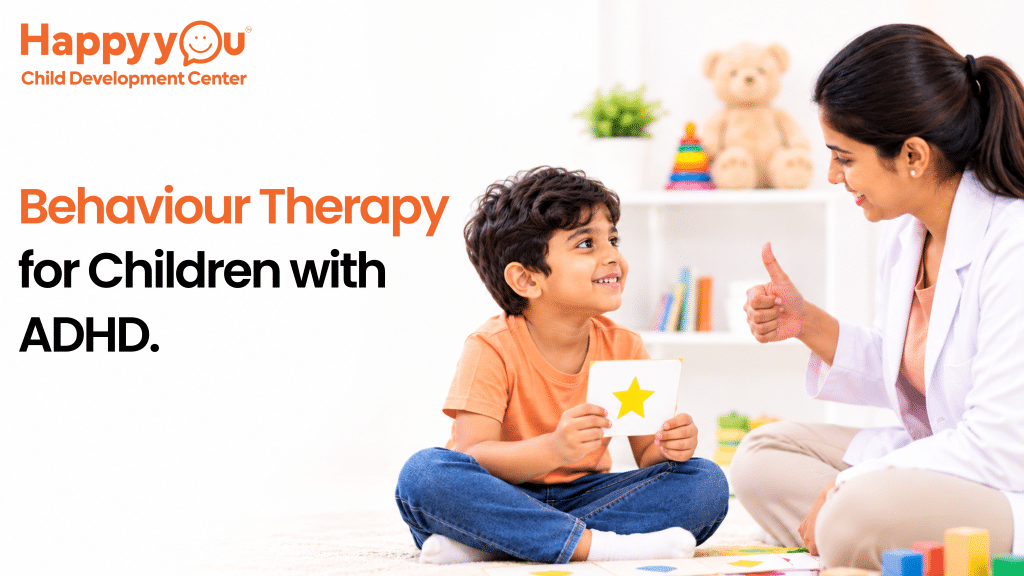
Every child is unique. Some children are naturally energetic, curious, and active, while others may find it difficult to sit still, follow instructions, control impulses, or stay focused on a task. For children with Attention-Deficit/Hyperactivity Disorder (ADHD), these challenges can affect daily life at home, school, and in social situations.
With the right support, children with ADHD can learn positive skills to improve their focus, attention, emotional regulation, and behaviour. Behaviour therapy for children with ADHD is a supportive approach that helps children develop healthy habits while also guiding parents and caregivers on how to manage challenging behaviours effectively.
At Happyyou Child Development Centre, children can receive compassionate support for emotional, behavioural, and developmental challenges in a child-friendly environment.
How ADHD Can Affect Children
ADHD is a neurodevelopmental condition that can affect a child’s ability to pay attention, control impulses, and manage activity levels. Every child may experience ADHD differently.
Some common signs may include:
- Difficulty paying attention for long periods
- Easily getting distracted
- Forgetting instructions or daily tasks
- Difficulty sitting still
- Excessive talking or interrupting others
- Acting without thinking
- Difficulty completing schoolwork
- Trouble following routines
- Emotional outbursts or frustration
- Challenges in social interactions
These behaviours do not mean that a child is lazy or intentionally misbehaving. Children with ADHD may need structured guidance and personalised strategies to manage their challenges.
What Is Behaviour Therapy for Children with ADHD?
Behaviour therapy focuses on understanding a child’s behaviour and encouraging positive changes through structured techniques and consistent support.
The goal is to help children:
- Develop better self-control
- Improve attention and concentration
- Follow instructions more effectively
- Build positive routines
- Reduce challenging behaviours
- Improve social skills
- Learn healthy ways to manage emotions
Behaviour therapy also involves parents and caregivers because consistency at home plays an important role in helping children develop positive behavioural patterns.
How Does Behaviour Therapy Help Improve Focus and Attention?
Children with ADHD may find it difficult to stay focused, especially when tasks feel boring, lengthy, or overwhelming. Behaviour therapy can help by breaking tasks into smaller and manageable steps.
Structured Routines
Children often benefit from predictable routines. A structured schedule can help them understand what is expected throughout the day.
For example:
- Wake-up routines
- School preparation
- Homework time
- Playtime
- Mealtime
- Bedtime routines
Consistent routines can make daily activities easier to understand and follow.
Positive Reinforcement
Positive reinforcement encourages children when they demonstrate desired behaviour.
For example, a child may receive appreciation when they:
- Complete homework
- Follow instructions
- Wait for their turn
- Stay focused on a task
- Speak politely
- Manage frustration calmly
Encouragement helps children understand which behaviours are positive and worth repeating.
Breaking Tasks into Small Steps
Long or complicated tasks can feel overwhelming for children with ADHD. Behaviour therapy may help divide activities into smaller steps.
Instead of saying, “Finish all your homework,” parents or therapists may guide the child to:
- Complete one question
- Take a short break
- Complete the next activity
- Review the work
This approach can make tasks feel more achievable.
Behaviour Therapy for Managing Hyperactivity and Impulsivity
Hyperactivity and impulsive behaviour can sometimes make it difficult for children to manage everyday situations. They may interrupt conversations, move constantly, act before thinking, or struggle to wait for their turn.
Behaviour therapy can help children learn important skills such as:
- Waiting patiently
- Listening carefully
- Thinking before acting
- Following rules
- Taking turns
- Managing excitement
- Responding calmly to frustration
The focus is not on changing a child’s personality. Instead, therapy helps the child develop practical skills to manage behaviour in different situations.
The Role of Parents in Behaviour Therapy
Parents play an important role in supporting children with ADHD. When parents understand their child’s behavioural needs, they can create a more supportive and structured environment.
Parents may learn strategies such as:
Giving Clear Instructions
Children with ADHD may respond better to short and simple instructions.
Instead of giving multiple instructions at once, try one instruction at a time.
Creating Consistent Rules
Clear and consistent rules can help children understand expectations.
Appreciating Positive Behaviour
Praise and encouragement can motivate children to continue positive behaviours.
Staying Calm During Challenging Situations
Children often learn from the emotional responses of adults. Calm and supportive communication can help children feel secure.
Maintaining Healthy Routines
Regular sleep, meals, study time, physical activity, and relaxation can support a child’s overall development.
How Behaviour Therapy Supports Emotional Development
ADHD can sometimes affect a child’s emotional well-being. Children may feel frustrated when they struggle to focus, complete tasks, or meet expectations.
Behaviour therapy can help children:
- Recognise emotions
- Express feelings appropriately
- Manage frustration
- Build confidence
- Develop problem-solving skills
- Improve social interactions
Supporting emotional development is an important part of helping children feel understood and confident.
Behaviour Therapy and School Performance
Children with ADHD may face challenges in school due to difficulties with attention, organisation, and task completion.
Behavioural strategies can support learning by helping children:
- Improve concentration
- Follow classroom instructions
- Complete assignments
- Organise school materials
- Manage time
- Participate positively in classroom activities
Parents, teachers, and child development professionals can work together to create consistent strategies that support the child’s learning needs.
Why Early Support Is Important for Children with ADHD
Early support can help children develop important behavioural and emotional skills during their developmental years.
With appropriate guidance, children can learn strategies that may help them:
- Improve daily routines
- Build confidence
- Develop independence
- Strengthen social skills
- Manage emotions
- Improve focus and attention
Every child’s developmental journey is different. Professional guidance can help parents better understand their child’s individual strengths and challenges.
Personalised Support for Children with ADHD
Children need different types of support depending on their individual needs. A personalised approach can help identify behavioural challenges and create suitable strategies for the child and family.
At Happyyou 24|7, the focus is on providing supportive care for children facing behavioural and developmental challenges. The organisation offers child psychology and child psychiatry support, with services designed to help children build confidence, emotional resilience, and healthy coping skills.
Parents looking for professional guidance can explore the services available at the Happyyou Child Development Centre to understand how personalised developmental support may help their child.
Creating a Supportive Environment at Home
A positive home environment can make a significant difference in a child’s daily behaviour.
Parents can support their child by:
- Maintaining consistent routines
- Providing clear expectations
- Offering positive encouragement
- Allowing regular breaks
- Reducing unnecessary distractions
- Encouraging physical activities
- Listening to the child’s feelings
- Celebrating small achievements
Small and consistent changes can help children gradually develop positive habits.
When Should Parents Seek Professional Support?
Parents may consider seeking professional guidance if their child’s difficulties with attention, hyperactivity, impulsivity, behaviour, or emotional regulation are affecting daily life.
Professional support may help parents understand:
- The child’s behavioural patterns
- Possible developmental challenges
- Suitable behaviour management strategies
- Ways to support learning and emotional development
- How to create a structured environment
Seeking support does not mean something is wrong with your child. It is a positive step toward understanding their needs and helping them reach their potential.
Behaviour Therapy Can Help Children Build Important Life Skills
Behaviour therapy is not only about managing difficult behaviour. It can help children develop skills that support them at home, in school, and in social situations.
With patience, consistency, and professional guidance, children can work on:
- Focus and attention
- Self-control
- Emotional regulation
- Social interaction
- Communication
- Problem-solving
- Confidence
- Independence
Every small achievement can become an important step in a child’s developmental journey.
Frequently Asked Questions (FAQs) Behaviour Therapy for Children with ADHD – Improve Focus, Attention & Behaviour
What is behaviour therapy for children with ADHD?
Behaviour therapy is a supportive approach that helps children develop positive behaviours, improve self-control, manage emotions, and build better routines. It can also guide parents in using effective behaviour management strategies.
Can behaviour therapy help improve focus in children with ADHD?
Behaviour therapy can help children develop strategies for improving attention and managing distractions. Structured routines, positive reinforcement, and breaking tasks into smaller steps may help children improve focus.
How does behaviour therapy help with ADHD behaviour?
Behaviour therapy helps children understand expectations and develop positive responses to different situations. It can focus on skills such as following instructions, waiting for turns, managing emotions, and controlling impulsive behaviour.
What role do parents play in ADHD behaviour therapy?
Parents play an important role by maintaining consistency, creating routines, giving clear instructions, and encouraging positive behaviour. Parent involvement can help children practise behavioural strategies in daily life.
Can behaviour therapy help children with hyperactivity?
Behaviour therapy can help children develop skills for managing impulsive and hyperactive behaviours. Strategies may focus on self-control, routines, emotional regulation, and appropriate behaviour in different situations.
How long does behaviour therapy take for ADHD?
The duration may vary depending on the child’s individual needs, behavioural challenges, goals, and progress. A qualified professional can recommend an appropriate support plan after understanding the child’s needs.
When should I seek professional support for my child with ADHD symptoms?
Parents may consider professional guidance when difficulties with attention, hyperactivity, impulsivity, behaviour, emotions, or learning are affecting the child’s daily life, school experience, or relationships.
Can children with ADHD improve their behaviour and focus?
With appropriate support, consistent strategies, and a supportive environment, children can develop important skills for managing behaviour, improving attention, building confidence, and handling everyday challenges.
Let’s Talk
Take the first step toward understanding your child’s developmental journey.
Call: 8142999996
Website: https://happyyou247.com/