
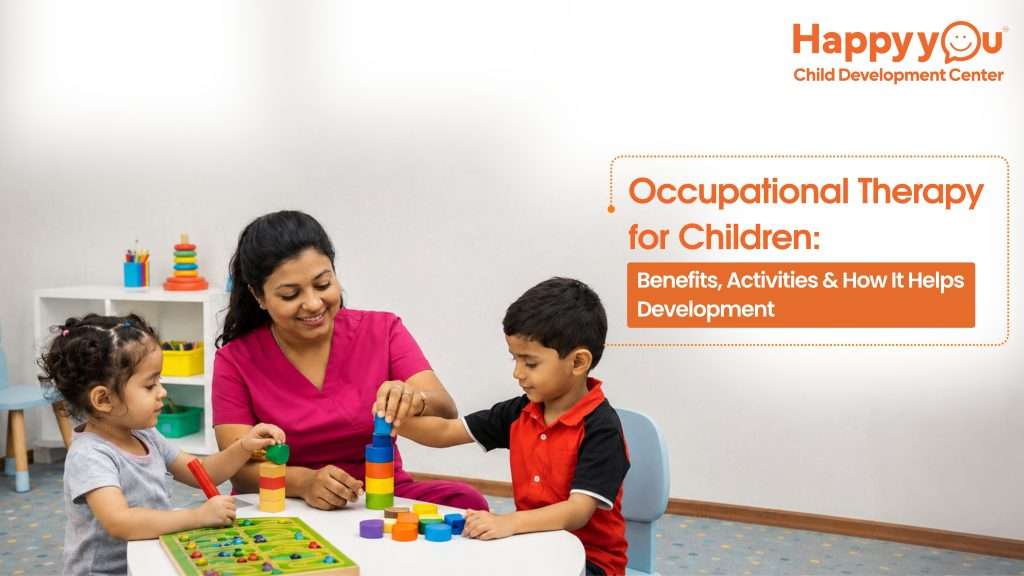
Every parent looks forward to watching their child grow, learn, and become more independent. Whether it’s holding a pencil, getting dressed without help, climbing stairs, or playing with friends, these everyday milestones are an important part of childhood.
For some children, however, these tasks can be more challenging than expected. They may struggle with activities that seem simple for other children their age, which can sometimes affect their confidence and participation in daily life.
A mother who visited Happyyou Child Development Centre in Nellore shared a similar experience. Her six-year-old son found it difficult to hold a pencil correctly, avoided playground activities, and often needed help with basic self-care tasks. As a parent, she wasn’t sure why these challenges were happening or how to help him.
After our assessment, she learned that occupational therapy could help her child develop the skills needed for everyday activities. With the right support and guidance, he gradually became more confident, independent, and comfortable in his daily routines.
Stories like these are common, and they highlight the important role occupational therapy can play in a child’s development. Understanding how occupational therapy works can help parents identify when support may be beneficial and how it can help children reach their full potential.
What Is Occupational Therapy for Children?
Occupational therapy (OT) helps children develop the skills they need to participate confidently in everyday activities. These skills may include physical, sensory, cognitive, social, and self-care abilities that are important for a child’s overall growth and independence.
The term “occupation” in occupational therapy does not refer to a job. For children, it refers to the activities they do every day, such as playing, learning, interacting with others, and taking care of themselves.
Occupational therapy can help children improve skills related to:
Self-Care Activities
Dressing, feeding, brushing teeth, grooming, and other daily routines.
School Skills
Holding a pencil, writing, concentrating in class, and completing school-related tasks.
Play Skills
Participating in games, exploring new activities, and developing creativity and problem-solving abilities.
Social Skills
Communicating, sharing, taking turns, and interacting with family members and friends.
Motor Skills
Improving balance, coordination, strength, and body control for everyday movements.
Sensory Processing
Responding appropriately to sounds, textures, lights, movement, and other sensory experiences.
By strengthening these essential skills, occupational therapy helps children become more confident, independent, and successful in their daily lives.
Why Occupational Therapy Is Important for Growing Children?
Childhood is a time of learning, exploration, and developing new skills. As children grow, they learn how to perform everyday tasks, interact with others, and become more independent. When a child faces challenges in these areas, occupational therapy can provide the support they need to develop essential life skills.
Occupational therapy focuses on helping children build confidence and independence through activities that are tailored to their individual needs and abilities.
With the right support, children can:
- Become more independent in daily activities such as dressing, eating, and personal care
- Improve skills needed for school and learning
- Develop better balance, coordination, and motor skills
- Build confidence in their abilities
- Strengthen attention, concentration, and problem-solving skills
- Participate more actively in play, social interactions, and everyday activities
Every child learns at their own pace. Occupational therapy helps children progress step by step, providing encouragement and guidance as they develop the skills needed to succeed in daily life.
Signs Your Child May Benefit from Occupational Therapy
Every child develops at their own pace, but some children may need additional support to build important life skills. Recognizing these signs early can help parents seek the right guidance and intervention.
Your child may benefit from occupational therapy if they experience:
- Difficulty holding pencils, crayons, or other small objects
- Challenges with handwriting despite regular practice
- Trouble dressing independently, such as managing buttons or zippers
- Difficulty using spoons, forks, or other eating utensils
- Poor balance, coordination, or body control
- Sensitivity to sounds, textures, touch, or certain environments
- Delays in fine motor or gross motor skill development
- Difficulty focusing on tasks or following instructions
If you notice several of these challenges affecting your child’s daily activities, an occupational therapy assessment can help identify areas where support may be beneficial.
Benefits of Occupational Therapy for Children
Occupational therapy helps children develop the skills they need to participate more confidently and independently in everyday life. Through personalized activities and structured support, children can make progress in multiple areas of development.
Some key benefits of occupational therapy include:
Improved Fine Motor Skills
Children develop stronger hand and finger muscles, helping them with activities such as writing, drawing, coloring, cutting, and handling small objects.
Enhanced Gross Motor Skills
Therapy helps improve balance, coordination, strength, and body awareness, making activities like running, jumping, climbing, and playing easier and more enjoyable.
Better Sensory Processing
Children learn to respond more comfortably to different sensory experiences, including sounds, textures, movement, and crowded environments.
Improved Attention and Focus
Occupational therapy can help children develop concentration, task completion skills, and classroom readiness.
Greater Independence
By learning practical daily living skills, children become more confident in managing everyday activities such as dressing, eating, and personal care.
With consistent support and practice, occupational therapy can help children build confidence, improve participation in daily activities, and reach important developmental milestones.
Common Occupational Therapy Activities
Occupational therapy sessions are designed to be engaging, interactive, and enjoyable for children. While many activities feel like play, each one is carefully chosen to help children develop specific skills that support their growth and independence.
Some common occupational therapy activities include:
Fine Motor Activities
These activities help strengthen hand and finger muscles and improve coordination.
Examples include:
- Bead threading
- Drawing and colouring
- Play dough activities
- Cutting with scissors
- Puzzles and building blocks
Gross Motor Activities
These activities help improve balance, coordination, strength, and body awareness.
Examples include:
- Obstacle courses
- Balance exercises
- Ball games
- Jumping and hopping activities
- Climbing and movement-based games
Sensory Activities
Sensory activities help children process and respond to sensory information more effectively.
Examples include:
- Sensory bins
- Swing activities
- Texture exploration
- Deep pressure activities
- Movement-based sensory play
Daily Living Skills Activities
These activities help children become more independent in their everyday routines.
Examples include:
- Dressing practice
- Feeding and utensil skills
- Personal hygiene routines
- Organizing belongings
- Following daily schedules
How Occupational Therapy Supports School Success?
Many of the skills children need for success in school are developed through occupational therapy. From holding a pencil correctly to staying focused during classroom activities, these skills play an important role in learning and participation.
Occupational therapy can help children:
- Develop a proper pencil grip
- Improve handwriting skills
- Increase attention and concentration
- Follow instructions more effectively
- Complete tasks independently
- Improve organization and classroom readiness
- Participate more confidently in school activities
By strengthening these foundational skills, occupational therapy helps children feel more comfortable, confident, and successful in the classroom environment.
What Happens During an Occupational Therapy Session?
At Happyyou Child Development Centre, every occupational therapy session begins with understanding the child’s individual strengths, challenges, and developmental needs.
Based on a detailed assessment, therapists create personalized therapy plans designed to support specific developmental goals. Activities are carefully selected to match the child’s age, abilities, and interests, making sessions both effective and enjoyable.
Throughout the therapy journey, progress is regularly monitored, and parents receive guidance on ways to support skill development at home. This collaborative approach helps children build confidence, develop essential life skills, and achieve meaningful progress in their daily activities.
Why Parents Choose Happyyou Child Development Centre in Nellore?
When it comes to a child’s development, parents want support they can trust. Choosing the right therapy centre is an important decision, and families look for a place that provides personalized care, professional guidance, and a positive environment for their children.
At Happyyou Child Development Centre in Nellore, we are committed to helping children reach their developmental goals through individualized support and evidence-based therapy.
Parents choose Happyyou because of:
Comprehensive Developmental Assessments
We evaluate each child’s strengths and challenges to create a clear understanding of their developmental needs.
Experienced Occupational Therapists
Our skilled therapists use proven techniques and engaging activities to help children build essential life skills.
Individualized Therapy Plans
Every child is unique, and therapy programs are tailored to meet their specific goals and developmental requirements.
Family-Centered Approach
We work closely with parents and caregivers, providing guidance and strategies that support progress both at home and during therapy sessions.
Child-Friendly Environment
Our centre offers a safe, welcoming, and engaging space where children feel comfortable learning and growing.
Regular Progress Monitoring
We track each child’s development and share updates with families, helping them understand and celebrate every milestone achieved.
In addition to occupational therapy, Happyyou Child Development Centre offers a range of child development services, providing comprehensive support for children and their families under one roof.
Frequently Asked Questions (FAQs) About Occupational Therapy for Children
1. At what age can a child start occupational therapy?
A child can begin occupational therapy as soon as developmental concerns are identified. Early intervention often helps children develop important skills more effectively and can lead to better long-term outcomes.
2. How often should occupational therapy sessions be scheduled?
The frequency of therapy sessions depends on the child’s individual needs, goals, and therapist’s recommendations. Some children may benefit from weekly sessions, while others may require a different schedule based on their progress and developmental requirements.
3. Is occupational therapy only for children with developmental disorders?
No. Occupational therapy can benefit any child who experiences difficulties with daily activities, motor skills, sensory processing, attention, coordination, or independence, regardless of whether they have a formal diagnosis.
4. How long does occupational therapy take to show results?
Every child progresses at their own pace. Some children may show improvements within a few weeks, while others may require longer-term support. Consistent therapy, family involvement, and regular practice play an important role in achieving positive outcomes.
5. What occupational therapy activities can parents try at home?
Parents can support skill development through simple activities such as playing with play dough, bead threading, drawing and colouring, building obstacle courses, puzzles, and encouraging children to practice daily tasks like dressing, feeding, and organizing their belongings.
Every Small Step Leads to Big Progress
Every child deserves the opportunity to develop the skills needed to participate confidently in everyday life. Occupational therapy helps children build independence, improve essential life skills, and gain confidence in their abilities.
With early intervention, personalized support, and consistent practice, children can make meaningful progress in their development and become more successful in daily activities at home, school, and in social settings.
At Happyyou Child Development Centre, we are committed to helping children achieve their developmental goals through compassionate care and individualized therapy programs.
If you have concerns about your child’s development, seeking professional guidance can be the first step toward helping them build confidence, independence, and lifelong skills.
Let’s Talk
Take the first step toward supporting your child’s development.
Call: 8142999996
Website: https://happyyou247.com/