
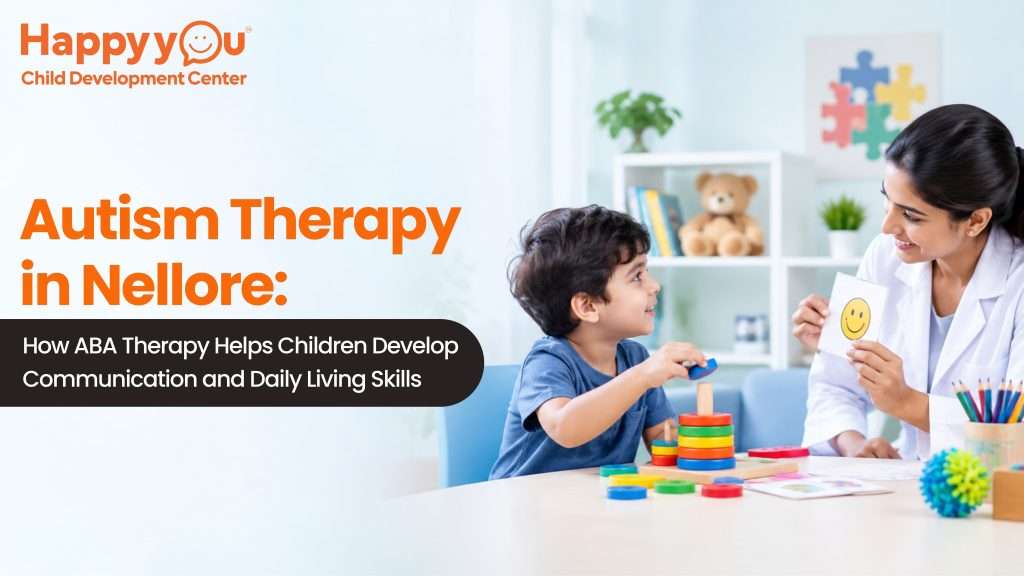
Every child develops at their own pace, but some children may need additional support with communication, social interaction, learning, and everyday activities. For children with autism spectrum disorder (ASD), individualised therapy can help build practical skills, encourage independence, and make daily routines easier to manage.
Autism Therapy in Nellore can help parents explore suitable support for their child’s developmental needs. One approach that may be recommended is Applied Behaviour Analysis (ABA) therapy, which uses structured learning, positive reinforcement, and regular progress monitoring to teach useful skills.
ABA therapy can focus on communication, following instructions, expressing needs, playing, and completing everyday activities. The goals should be based on each child’s strengths, preferences, developmental level, and individual requirements rather than following the same programme for every child.
Understanding the available options can help parents make informed decisions about their child’s developmental journey.
Understanding ABA Therapy for Children with Autism
Applied Behaviour Analysis, commonly known as ABA, is a behavioural approach that focuses on understanding how learning happens and teaching skills through planned activities and practice.
For children with autism, an individualised ABA programme may help develop communication, social participation, learning, and daily living skills. Therapists may use play-based activities, visual prompts, step-by-step instructions, and positive reinforcement to encourage learning.
For example, if a child finds it difficult to ask for water, a therapist may teach them to communicate this need through spoken words, gestures, pictures, or an appropriate communication device.
The aim is to make communication more accessible and help the child express their needs in ways that work for them.
Parents who have noticed developmental differences can also read about the early signs of autism in children to understand when a professional developmental assessment may be helpful.
How Does ABA Therapy Support Communication Development?
Communication involves more than speaking. Children may communicate through words, gestures, facial expressions, pictures, or assistive communication tools.
ABA-based strategies can support communication goals when they are appropriate for the individual child.
1. Learning to Express Basic Needs
Some children may find it difficult to communicate when they are hungry, thirsty, tired, uncomfortable, or need assistance.
Therapy can provide opportunities to practise expressing these needs through an accessible communication method. The therapist may use everyday objects, pictures, gestures, or spoken language depending on the child’s abilities.
The goal is to help children communicate more effectively and reduce frustration associated with unmet needs.
2. Understanding Simple Instructions
Following simple instructions can help children participate in home routines, learning activities, and play.
Therapists may introduce instructions one step at a time, use visual cues, and gradually adjust the level of support as the child becomes more comfortable.
Examples include putting a toy away, bringing a familiar object, or choosing between two activities.
3. Developing Functional Language
Children who use spoken language may benefit from activities that encourage meaningful words and phrases. Those who do not communicate verbally can be supported through gestures, picture-based systems, or other suitable communication methods.
Speech and language therapy may also be recommended as part of a broader developmental support plan.
Progress should be assessed according to the child’s communication needs, not only by the number of words they speak.
Building Everyday Living Skills Through ABA Therapy
Daily living skills help children participate in everyday routines and gradually develop greater independence. The level of assistance required varies from child to child.
Personal Care and Hygiene
Depending on their developmental level, children may practise steps involved in washing their hands, brushing their teeth, using the bathroom, or getting dressed.
A therapist may break an activity into smaller steps, demonstrate each step, and provide support as needed. Over time, prompts may be adjusted according to the child’s progress.
Eating and Mealtime Routines
Mealtimes involve several skills, including sitting comfortably, communicating preferences, using utensils, and following familiar routines.
Therapy may support appropriate mealtime participation while respecting a child’s sensory needs and food preferences. Feeding difficulties that may have a medical or nutritional cause should also be discussed with the relevant healthcare professional.
Following Daily Routines
Predictable routines can help some children understand what happens next and prepare for transitions between activities.
Visual schedules, simple instructions, and consistent routines may help children move between tasks with greater confidence.
For example, a visual sequence could show the steps involved in getting ready for school. The support can be adapted as the child learns each step.
Developing Play and Social Participation
Play provides opportunities to practise turn-taking, sharing interests, requesting assistance, and participating in activities with others.
A therapist may introduce activities based on the child’s interests and gradually create opportunities for interaction. The focus should be on meaningful participation and communication rather than forcing a child to behave in a particular way.
Why Does Individualised Autism Therapy Matter?
Autism affects children differently. Some children may need support with spoken communication, while others may benefit from assistance with transitions, sensory experiences, social participation, or everyday tasks.
An individualised therapy plan takes these differences into account.
Before setting goals, a qualified professional may consider the child’s developmental history, existing skills, communication preferences, family priorities, and areas where additional support is needed.
Goals should be practical and meaningful. For one child, a goal may involve communicating when they need help. For another, it may involve completing part of a morning routine or participating in a preferred activity with a family member.
Progress should be reviewed regularly, and strategies should be adjusted when something is not working well for the child.
Therapy should also respect the child’s comfort, dignity, and autonomy. The purpose is to support communication, independence, and quality of life, not to suppress harmless autistic behaviours simply because they look different.
Signs That Your Child May Benefit from Developmental Support
Parents may consider seeking professional guidance when they notice ongoing differences in their child’s development or everyday functioning.
Some signs that may warrant further assessment include:
- Delayed speech or difficulty expressing basic needs.
- Limited use of gestures or other communication methods.
- Difficulty understanding or responding to social communication.
- Repetitive behaviours or a strong preference for familiar routines.
- Distress during transitions between activities.
- Difficulty learning certain self-care or daily living skills.
- Unusual responses to sounds, textures, lights, or other sensory experiences.
These signs do not automatically mean a child has autism. Some characteristics can occur for different reasons, so a qualified professional should assess the child’s overall development.
If you have concerns, reviewing the early signs of autism and when to seek help may help you prepare questions for a professional consultation.
It is also important not to delay seeking guidance if your child loses previously acquired communication or developmental skills.
How Can Parents Support Learning at Home?
Parents and caregivers play an important role in helping children practise skills outside therapy sessions. Everyday activities can provide opportunities for learning without making the entire day feel like a formal lesson.
Use clear and simple communication: Give your child enough time to understand instructions and respond. Pair spoken words with gestures or visual support when useful.
Follow your child’s interests: Favourite toys, books, songs, and activities can create natural opportunities for communication and interaction.
Encourage choices: Offer two suitable options, such as choosing a toy or selecting an activity. This can help children express preferences.
Create predictable routines: Visual schedules and consistent sequences may make everyday activities easier to understand.
Recognise progress: Acknowledge meaningful attempts to communicate, participate, or complete a task. Support should encourage learning without creating unnecessary pressure.
Coordinate with therapists: Discuss which strategies are appropriate for home use and how to adapt them to your child’s needs.
Not every strategy works for every child. Parents should work with qualified professionals to identify approaches that are comfortable, practical, and suitable for their family.
ABA Therapy and Other Developmental Services
ABA therapy is one possible approach to supporting children with autism. Depending on a child’s needs, a broader plan may include other services.
Speech and language therapy can support understanding, spoken language, and alternative communication methods.
Occupational therapy may help with selected daily living activities, fine motor skills, and participation in routines.
Developmental support can focus on learning, play, social participation, and age-appropriate skills.
Parent guidance can help caregivers understand their child’s needs and practise suitable strategies at home.
These services are not interchangeable, and not every child requires all of them. A professional assessment can help determine which interventions may be beneficial.
No therapy guarantees a particular outcome. Progress depends on individual needs, goals, the suitability of the intervention, and other factors. Regular review helps families understand whether the chosen approach is useful.
Frequently Asked Questions About Autism Therapy in Nellore
1. How Does ABA Therapy Help Children with Autism?
ABA therapy uses structured learning and positive reinforcement to teach selected skills. Depending on the child’s needs, goals may include communication, daily living activities, following instructions, and participating in meaningful interactions.
2. At What Age Can a Child Begin Autism Therapy?
Support can begin when developmental concerns are identified. The appropriate approach depends on the child’s needs and professional assessment. Parents should discuss concerns early rather than waiting for difficulties to increase.
3. Can ABA Therapy Help a Child Who Does Not Speak?
ABA-based strategies may support functional communication, but spoken language is not the only communication goal. Depending on the child, communication may involve gestures, pictures, sign-based approaches, or assistive communication devices. A speech and language professional may also be helpful.
4. How Long Does Autism Therapy Take to Show Progress?
There is no fixed timeline. Children develop skills at different rates, and progress varies according to their needs, goals, and support plan. Regular reviews help determine whether the intervention should be adjusted.
5. Can Parents Practise Therapy Activities at Home?
Yes, when the activities and strategies have been discussed with the child’s therapist. Everyday routines can provide opportunities to practise communication and daily living skills without placing unnecessary pressure on the child.
6. Is ABA Therapy Suitable for Every Child with Autism?
No single approach is suitable for every child. The decision should consider the child’s preferences, strengths, support needs, and family priorities. Therapy should be individualised, respectful, and regularly reviewed.
Explore Autism and Developmental Support at HappyYou Child Development Centre
Every child deserves support that recognises their individual strengths, communication style, and developmental needs. If you have concerns about your child’s communication, social interaction, or daily living skills, seeking professional guidance can help you understand the available options.
HappyYou Child Development Centre can be contacted to enquire about child development services and discuss your child’s support needs. Parents can explore the available information and ask about suitable guidance for their child’s developmental concerns.
Contact Us: https://happyyou247.com/contact-us/
You can also revisit the guide to early autism signs in children to learn more about developmental concerns and when to seek professional advice.
Consider discussing your child’s needs with a qualified developmental or healthcare professional to identify appropriate assessments and support options. The right plan should focus on practical goals, meaningful communication, and the child’s overall well-being.